This article aims to provide businesses with actionable solutions on how to use Hong Kong-based cloud hosting to achieve high availability and cross-border acceleration. It covers network architecture, load balancing, data redundancy, DNS and CDN optimization, as well as security and compliance recommendations to facilitate SEO and GEO search optimization.
Hong Kong boasts abundant international links, access to multiple operators, and low latency, making it an ideal acceleration node for markets in the Asia-Pacific region and around the world. Clustered cloud servers can be distributed across multiple nodes and managed uniformly, improving availability and cross-border access experience.
A high-availability architecture must include multi-availability zone deployment, instance redundancy, automatic scaling, and health checks. Deploying a cluster of cloud servers across different data centers can reduce single points of failure, and combined with automated operations and maintenance, it ensures stability and rapid fault recovery.
L4/L7 load balancing is used for session allocation and traffic scheduling. Combined with intelligent traffic management and weight adjustment, it enables proximity-based access and balanced traffic distribution. Work in conjunction with DNS policies to improve overall availability and access stability.
Data should adopt a master-slave or multi-active strategy, combined with snapshots and asynchronous/synchronous replication. Regularly back up and test recovery procedures to ensure that business operations can switch quickly in the event of a single point of failure or network interruption, while maintaining data consistency.
Cross-border acceleration relies on CDN edge nodes, routing optimization, and transmission protocol optimizations (such as TCP optimization or QUIC). Deployment Hong Kong Station Cluster As edge computing nodes, cloud servers can reduce origin-server latency and improve the stability and throughput of cross-border access.
By combining Anycast with GeoDNS, users can be routed to the nearest node based on their geographical location, reducing DNS resolution latency. Configure multi-level resolution strategies and implement proper TTL and health checks to improve switching speed and availability.
Multi-operator access and BGP intelligent routing can reduce packet loss and jitter. It monitors link quality and supports elastic bandwidth expansion to ensure stable service during peak times, while leveraging QoS policies to prioritize critical traffic.
Cross-border deployment must focus on DDoS protection, WAF policies, transport-layer encryption, and access control. Comply with data sovereignty and regulatory requirements by implementing proper log auditing and privacy protection to meet the legal and regulatory demands of various markets.
Build automated deployment, configuration management, and continuous delivery pipelines to improve operational efficiency. By integrating a unified monitoring, alerting, and testing framework, disaster recovery drills are conducted regularly, and monitoring metrics and response procedures are adjusted according to SLAs.
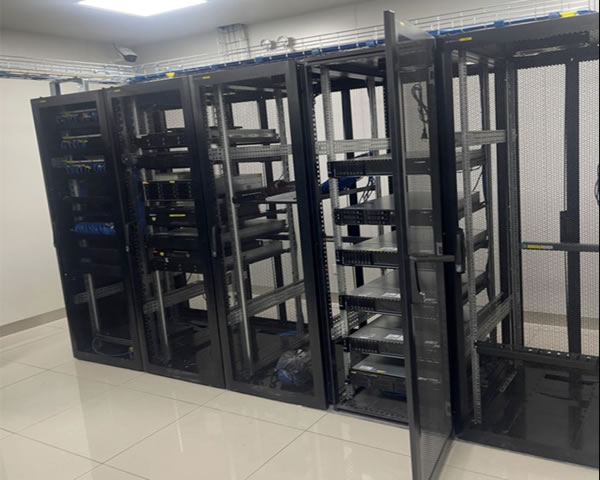
When enterprises implement cloud hosting in Hong Kong to achieve high availability and cross-border acceleration, they should first assess their business needs and access distribution, adopting multi-node redundancy, load balancing, CDN and DNS optimization, as well as strengthening security and compliance. Verify performance and switching strategies in phases, continuously monitor and optimize costs and experience.
- Latest articles
- Community Q&A Summary: Are US Servers Offline And Common Recovery Experiences Nowadays?
- Recommendations For Establishing Audit And Security Incident Response Processes For High-defense VPS Logs Without Filing In Hong Kong
- From The Perspective Of SEO Optimization, Are Cambodia Servers Useful? Their Potential Impact On Rankings
- Analysis Of The Impact Of The U.S. Cluster Server Bandwidth Billing Model On Long-Term Costs
- How To Temporarily Scale Up During Peak Activity By Purchasing A Korean Cloud Server For One Day
- An Operations Perspective Analyzes The Key Points Of High-availability Architecture And Disaster Recovery Design For High-protection Servers In The United States
- Common Customer Questions And Strategies For Promoting Japanese Cloud Servers
- Experts Provide A Detailed Overview Of Several Common Deployment Methods For Hong Kong Server Clusters In The Market
- How Much Does Broadband Cost In Hong Kong Data Centers Compare To Domestic And International Network Latency?
- The Law Reminds Chinese People On How To Trade On Korean Servers And Pay Attention To Compliance In Cross-border Transactions
- Popular tags
-

Media Explores Where Hong Kong’s Largest Data Centers Are And Compares Them With Facilities Of Major Service Providers
The media reviews where Hong Kong’s largest data centers are located and compares the facilities of major service providers. It outlines the distribution of data centers in Hong Kong, the advantages of each area, the criteria for comparing service providers’ facilities, and provides recommendations to help businesses make more informed decisions regarding hosting and cloud services. -

The Best Way To Watch Netflix Through Hong Kong Native IP
This article explains the best ways to watch Netflix through a native IP in Hong Kong, providing practical tips and suggestions. -

From A Security And Compliance Perspective, What Is The Value Of Hong Kong-origin IP, And How Can Abuse Risks Be Avoided?
It analyzes the definition of Hong Kong-native IPs from a security and compliance perspective, examines their role in compliance reviews and GEO targeting, assesses abuse risks, and provides actionable compliance and security prevention recommendations for corporate decision-making and operational standardization.